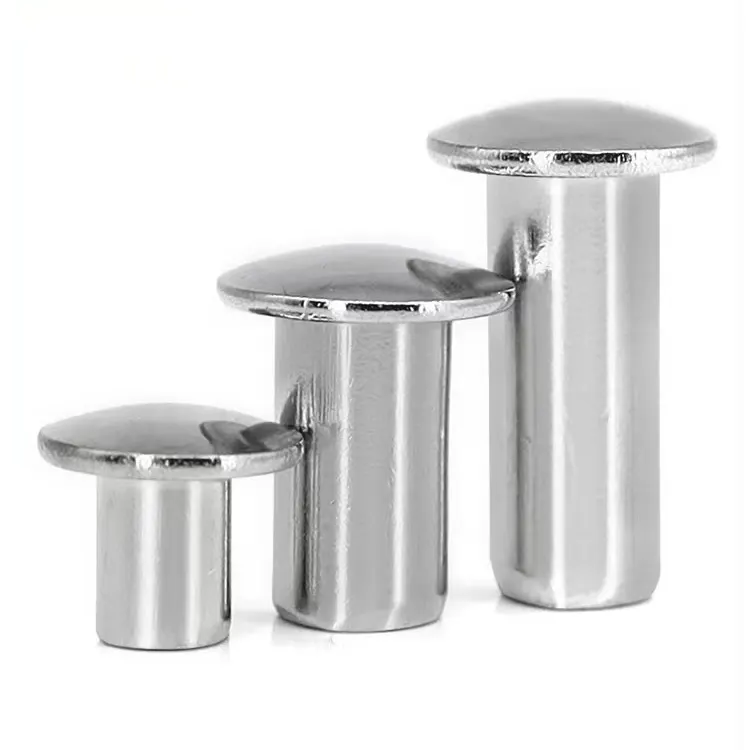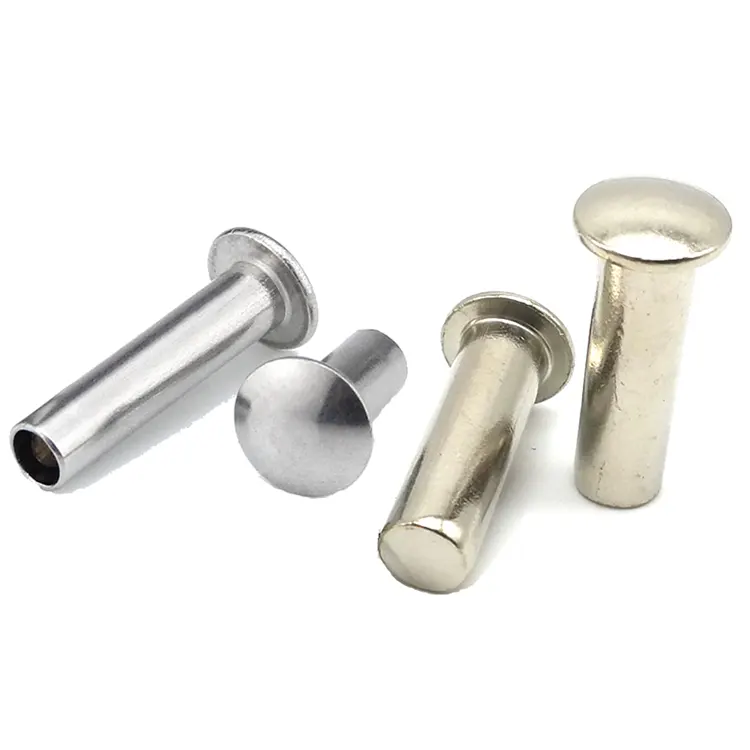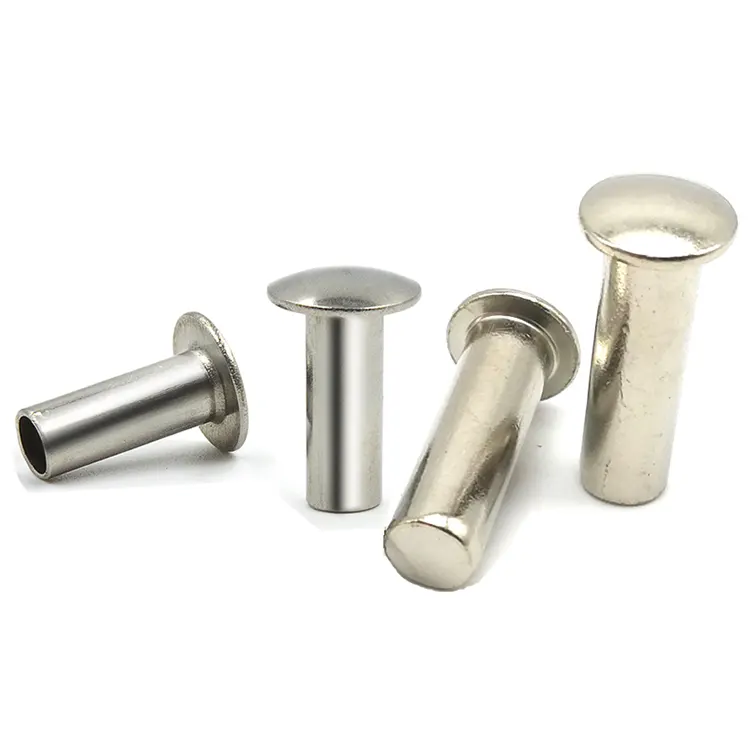
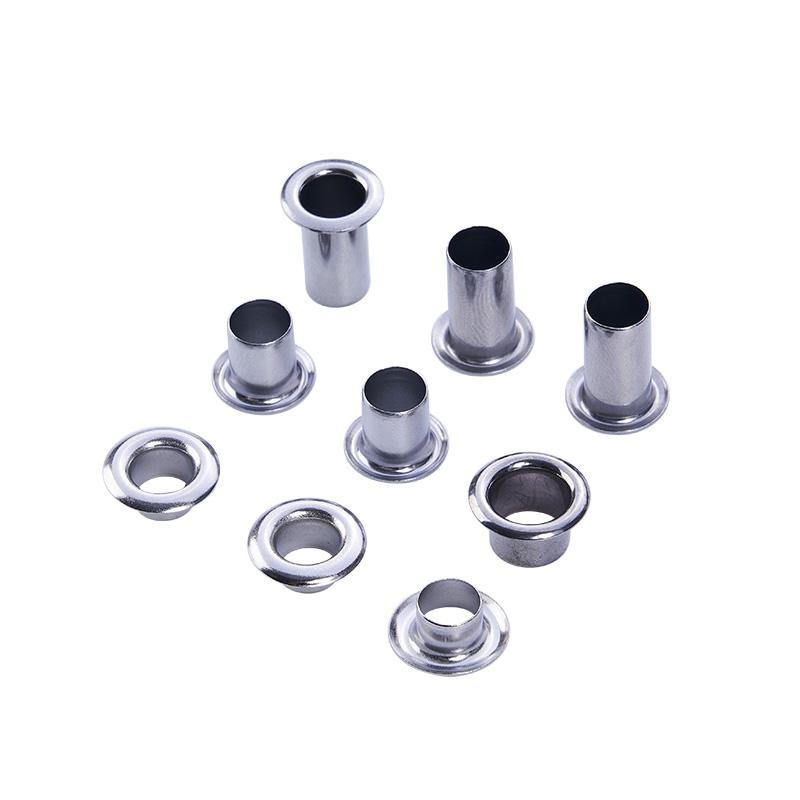
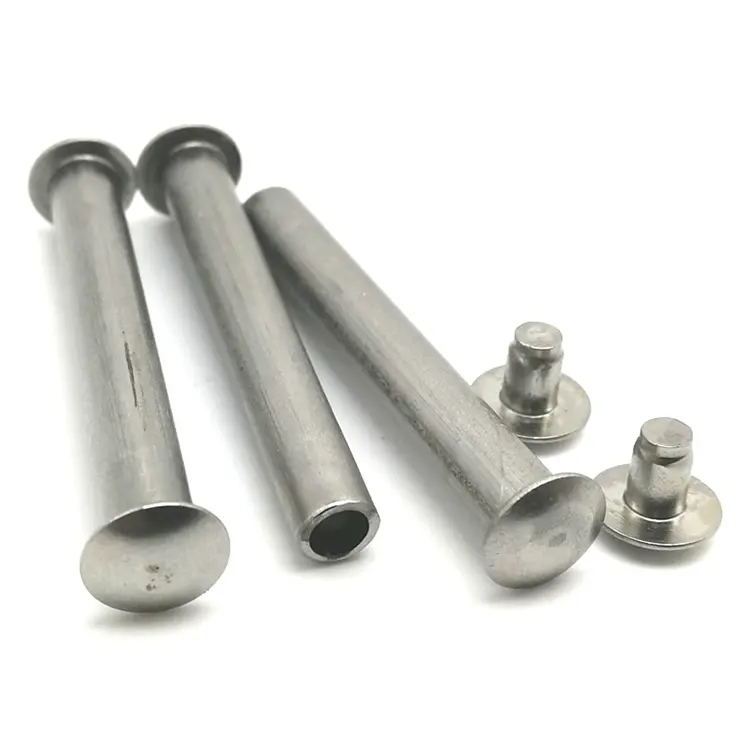
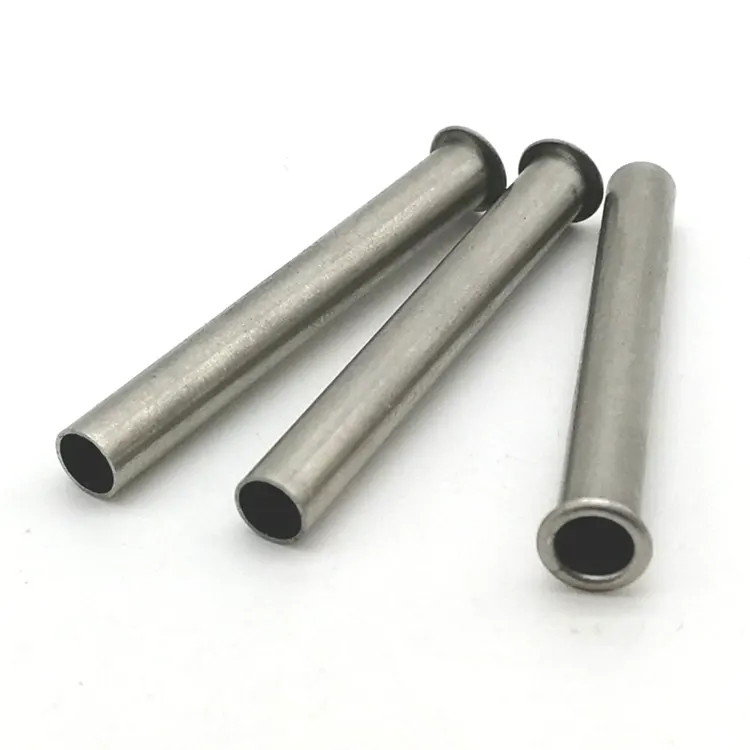
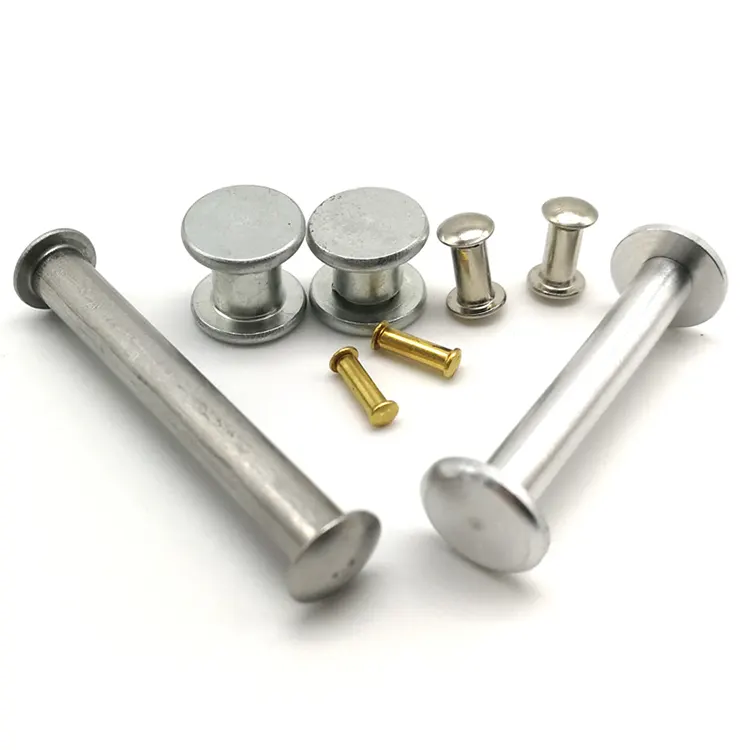
As one of professional manufacturer in China, Notin would like to provide you Rivets. And we will offer you the best after-sale service and timely delivery.
What is a rivet?
A rivet is a permanent mechanical fastener used to join two or more materials. Rivets work by inserting a metal pin into an aligned hole and deforming the end, creating a strong, secure, and durable connection. Unlike temporary fasteners like screws, rivets do not rely on threads, but instead form a permanent connection, making them ideal for applications requiring high strength, durability, and vibration resistance.
Classification of Rivets
Rivets are typically categorized by head shape, degree of hollowness, or material.
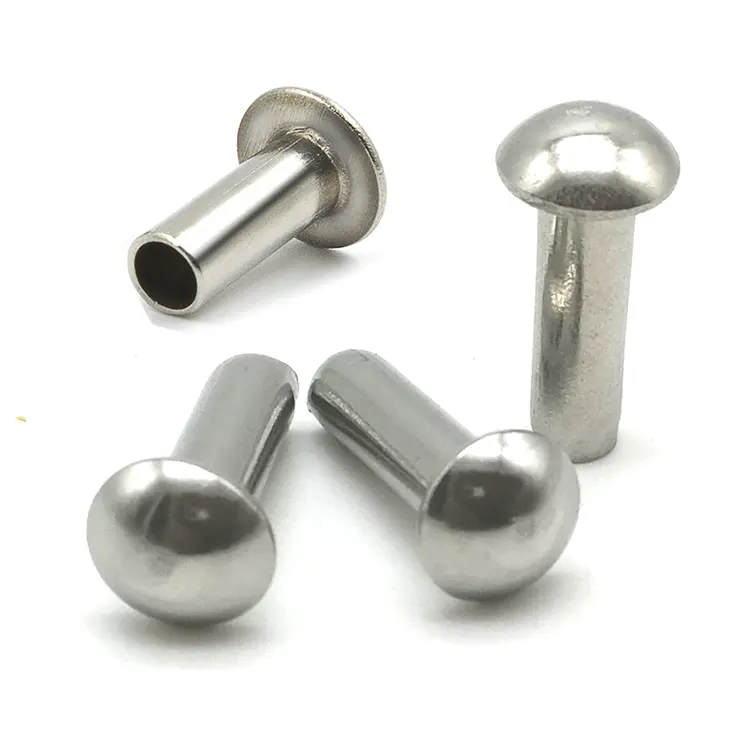
Based on head shape, rivets can be classified as flat head rivets, round head rivets, countersunk head rivets, mushroom head rivets, universal head rivets, truss head rivets, etc.
Based on degree of hollowness, rivets can be classified as solid rivets, semi-tubular rivets, or full tubular rivets.
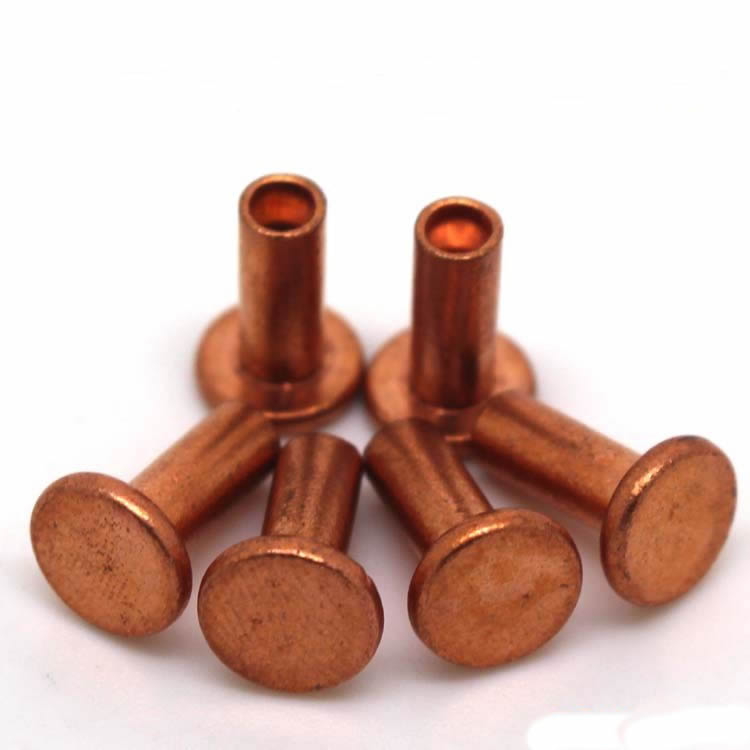
Based on material, rivets can be classified as brass rivets, stainless steel rivets, steel rivets, aluminum rivets, copper rivets, etc.
Rivet surfaces are typically treated with rust-proofing treatments, primarily electroplating, including zinc plating, nickel plating, chrome plating, tin plating, gold plating, and silver plating. Electroplating is a common rust-proofing method for rivets. It applies a layer of plating to the rivet surface through physical or chemical methods. The plating effectively prevents corrosion and rust, while also providing a certain aesthetic effect.
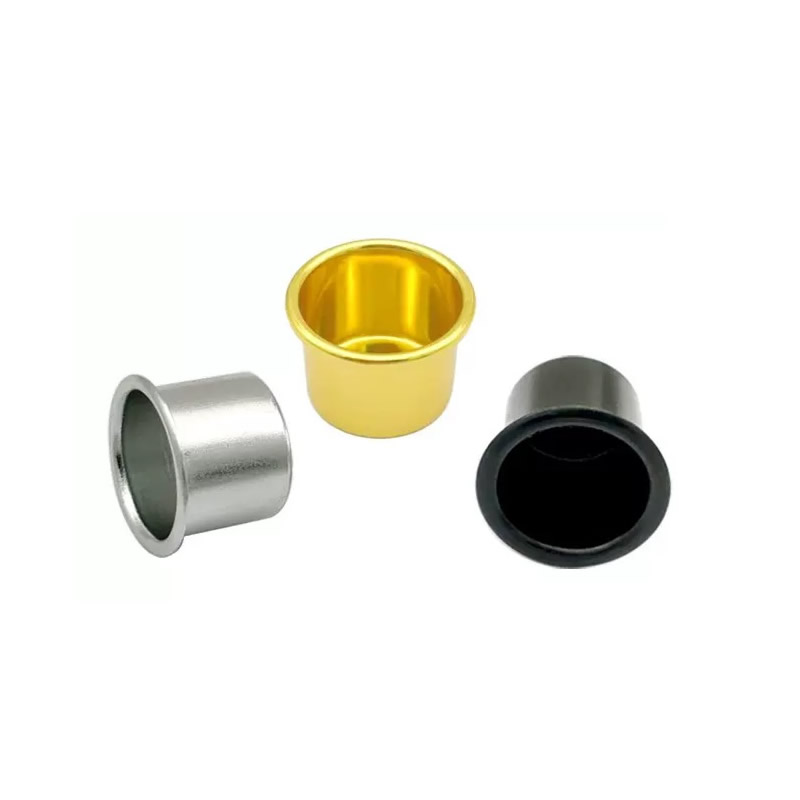
Another special surface treatment method is head coating. Head coating is performed after the rivet is electroplated. This allows for a variety of colors on the rivet head, achieving an aesthetically pleasing finish.
Aluminum rivets cannot be electroplated, but they can be anodized. Anodizing also allows for a variety of color options, but the unit price is higher than electroplating.
Rust-proofing the rivet surface is crucial, effectively extending the rivet's service life and ensuring a secure connection. Different rust-proofing methods are suitable for different environments and applications, so the choice should be tailored to the specific situation.
구리 둥근 머리 리벳은 산업 제조, 가구 제작 및 기타 분야에서 널리 사용되는 패스너 유형입니다. 무산소동이라고도 알려진 구리는 전기 전도성과 열 전도성이 우수할 뿐만 아니라 내식성과 연성이 우수한 고순도 구리 합금입니다. 이러한 특성은 구리 둥근 머리 리벳이 다양한 환경에서 안정적인 성능을 유지하고 서비스 수명을 연장하도록 보장합니다. 또한 구리에는 특정 항균 특성이 있어 인체와 자주 접촉하는 제품에서 박테리아 성장 위험을 줄일 수 있습니다.
더 읽어보기문의 보내기구리 팬 헤드 리벳은 고순도이며 우수한 전도성을 제공하므로 높은 전도성이 요구되는 용도에 적합합니다. Nuote Metals는 구리 팬 헤드 리벳 생산을 전문으로 합니다. 우리는 C1100과 같은 구리 함량이 높은 등급을 사용하지만 맞춤형 등급도 생산할 수 있습니다. 당사의 구리 리벳은 산화에 저항하고 48시간 염수 분무 테스트를 견딜 수 있도록 특수 표면 처리를 거쳤습니다.
더 읽어보기문의 보내기구리 버섯 머리 리벳은 두 개 이상의 재료를 고정하는 데 사용되는 기계 부품입니다. 일반적으로 버섯 모양의 머리와 반대쪽 끝에 단단하거나 반쯤 빈 막대가 있습니다. 설치하는 동안 다른 쪽 끝을 특수 리벳팅 기계로 두들겨 치거나 두드리면 다른 쪽 머리가 팽창하여 제자리에 고정됩니다. Nuote Metals는 구리 버섯머리 리벳 전문업체입니다. 우리는 광범위한 리벳 사양을 제공하고 고객의 요구를 충족시키기 위해 다양한 크기의 40개 이상의 리벳팅 기계를 활용합니다.
더 읽어보기문의 보내기중국 둥관에 위치한 Nuote Metals는 리벳 전문 제조업체입니다. 우리의 리벳은 고품질이며 납품이 보장되어 국내 및 해외 고객 사이에서 호평을 받고 있습니다. 당사의 구리 플랫헤드 리벳은 고품질 구리로 제작되어 매끄럽고 섬세한 표면과 안정적이고 견고한 느낌을 제공합니다. 플랫 헤드 디자인은 접촉 면적을 늘릴 뿐만 아니라 압력을 효과적으로 분산시켜 보다 안정적인 연결을 보장합니다.
더 읽어보기문의 보내기중국 Nuote Metals에서 생산하는 구리 접시 머리 리벳은 기계 제조, 전자 장비, 가구 조립 및 기타 산업 분야에서 주로 사용되는 일반적인 금속 패스너입니다. 전통적인 금속 재료인 구리는 전기 및 열 전도성과 내식성이 뛰어나 특정 용도에 널리 사용됩니다. 접시 머리 리벳은 냉간 압조 또는 열간 단조 공정을 통해 제조된 패스너입니다. 단순한 구조에는 특수한 연결을 생성하기 위한 리벳팅 도구가 필요합니다.
더 읽어보기문의 보내기1. Ease of Installation
Rivets are fast to install, and even fully automated for high-volume applications, resulting in a simple and efficient operation process.
2. Connection Reliability
The riveting process is standardized, with strict quality control, resulting in highly stable connections. Visual inspection allows for quick verification of connection quality.
3. Vibration and Impact Resistance
Rivets connect through deformation or interference fit, providing strong clamping force and excellent vibration resistance, capable of withstanding vibration and shock.
4. Low Cost
Rivets are easy to install and can be fully automated, saving significant labor costs.
Aluminum Rivets
Advantages: Lightweight, reduces overall product weight, low cost, suitable for general civilian applications.
Disadvantages: Low tensile and shear strength, unsuitable for high-strength workpieces, prone to electrochemical corrosion when in contact with metals such as stainless steel.
Stainless Steel Rivets
Advantages: Strong corrosion resistance, high hardness, suitable for high-strength workpieces (such as marine equipment)
Disadvantages: Higher cost, typically more expensive than aluminum rivets of the same specification.
Brass and Copper Rivets
Advantages: Excellent conductivity (such as connecting electronic components), good corrosion resistance.
Disadvantages: Higher cost, more difficult to process.
Steel Rivets
Advantages: High hardness, high connection reliability, and wide applicability.
Disadvantages: Compared to other materials, iron rivets are more prone to rusting.
Rivets have a wide range of uses, from small items like a pair of scissors to large items like airplanes and ships, as well as in high-precision medical applications.
Industrial Manufacturing
Rivets are used in a wide variety of industrial fields, wherever there is a need to connect two or more materials.
Electronics
Rivets secure heat sinks and chips, providing both vibration damping and noise reduction, and are widely used in the cooling systems of electronic products such as computers and mobile phones.
Automotive
Rivets are widely used to connect components of automobile bodies and chassis, such as doors and hoods. Their lightweight and corrosion-resistant properties make them an indispensable joining method in automotive manufacturing.
Aerospace
In aircraft manufacturing, rivets are used to connect different fuselage components, such as wings and tailplanes. Millions of rivets create high-strength, corrosion-resistant joints. Aluminum and titanium alloy rivets are often used to connect components of corresponding materials, ensuring stability in extreme environments.
Rivets are used everywhere. The above examples only represent a small number of their applications. We see rivets everywhere in our daily lives, such as on scissors, folding beds, and strollers etc. Rivets can be customized to different sizes and materials depending on the application.
Nuote Metals has specialized in the rivet industry for over a decade. Our factory is located in Dongguan, a city known as the "World Factory," a city with a developed industry and convenient transportation. This allows us to respond quickly when acquiring raw materials and supporting surface treatments, meeting our customers' needs for quick access to samples and bulk orders. We produce 10 million rivets daily and have molds of various specifications, allowing us to produce rivets as small as 0.8mm and as large as 10mm. We welcome your inquiries and visits.