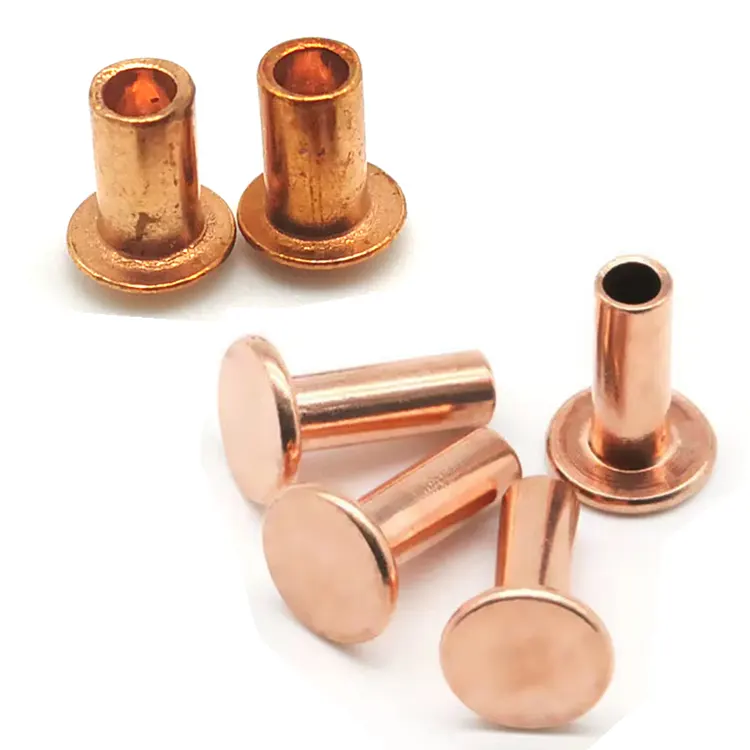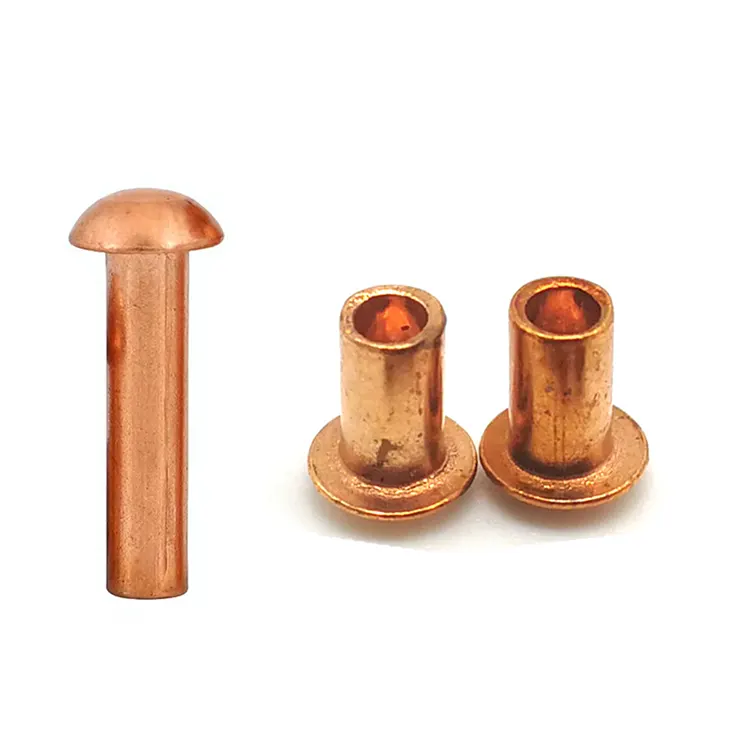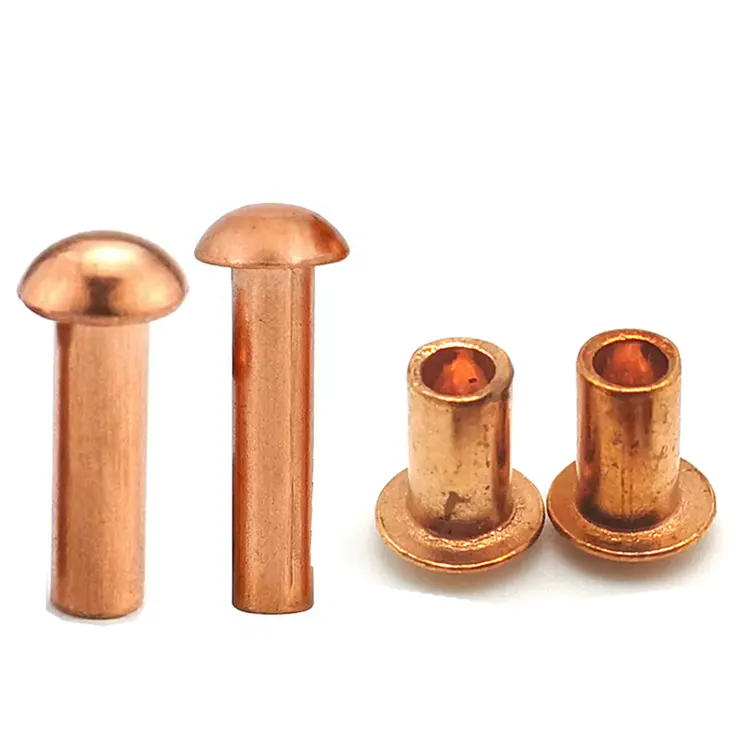
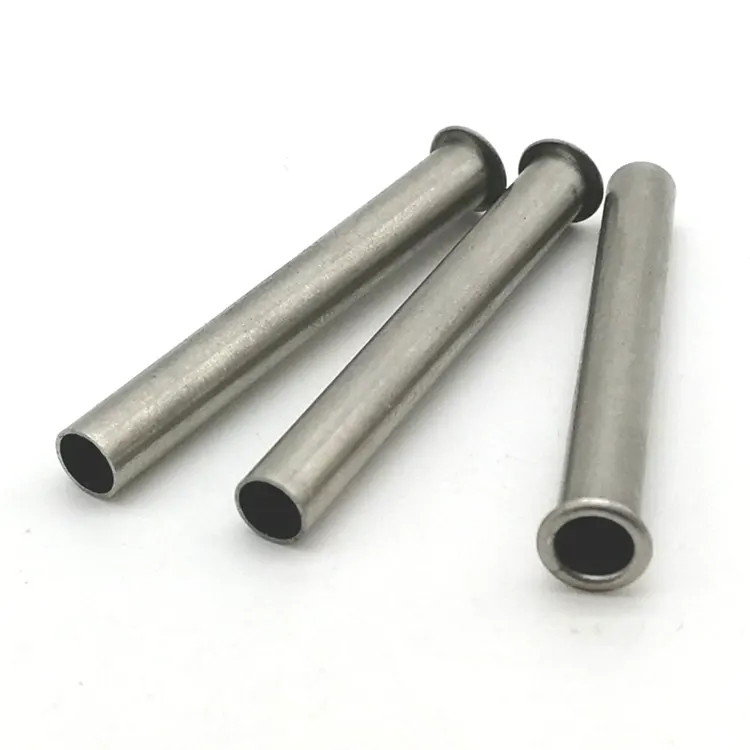
One of Chinese manufacturer of Special Rivets, offering excellent quality at a competitive price, is Notin. Feel free to get in touch.
In the field of mechanical manufacturing and assembly, rivets are a common fastener used to professionally connect two or more parts. According to the degree of standardization, rivets can be divided into two categories: standard rivets and non-standard rivets. The size, shape and material of standard rivets are uniformly specified, while non-standard rivets are customized according to specific needs. The following will introduce the characteristics and applications of non-standard rivets from multiple aspects.
What are non-standard rivets?
Non-standard rivets are also called special rivets. They refer to rivets that do not meet national standards or industry general standards. Their size, material, structure and other parameters are designed and manufactured according to the specific needs of customers. Due to the different connection requirements of different industries and equipment, standard rivets may not meet the requirements of certain special scenarios, so non-standard rivets came into being.
What are the characteristics of special rivets?
(1) Strong customization: Non-standard rivets can be personalized according to factors such as the use environment, stress conditions, and assembly methods to ensure that they perform well in actual applications.
(2) Diverse materials: In addition to common carbon steel and stainless steel, non-standard rivets can also be made of special materials such as aluminum alloy, copper alloy, titanium alloy, etc. to meet different corrosion resistance, strength and weight requirements.
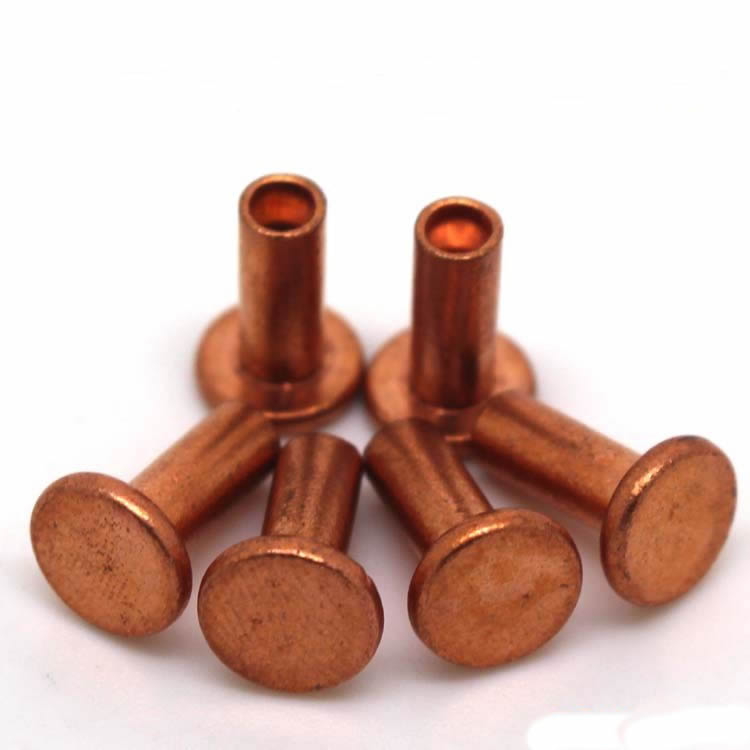
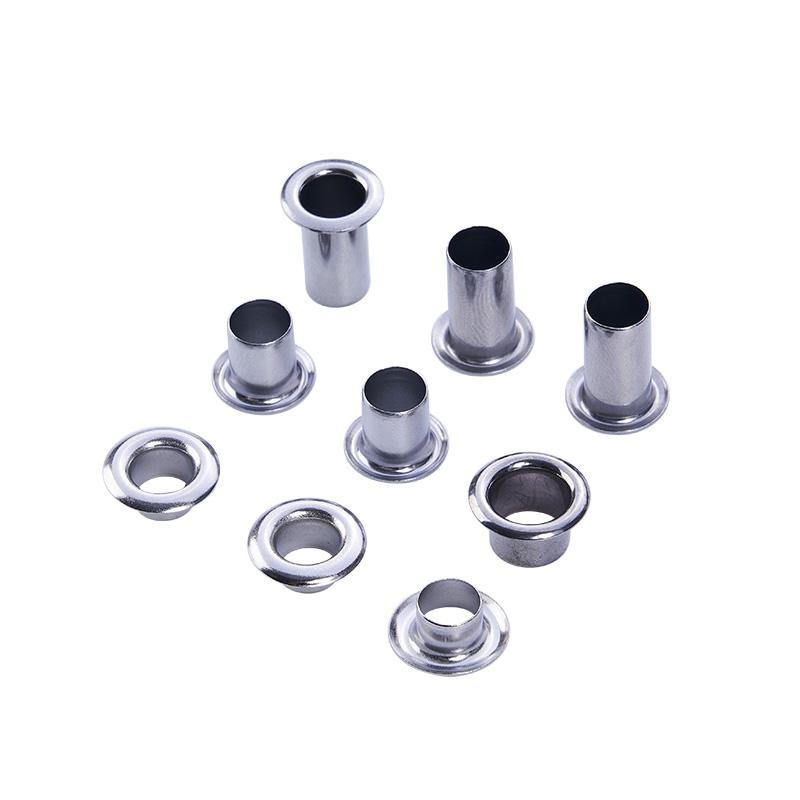
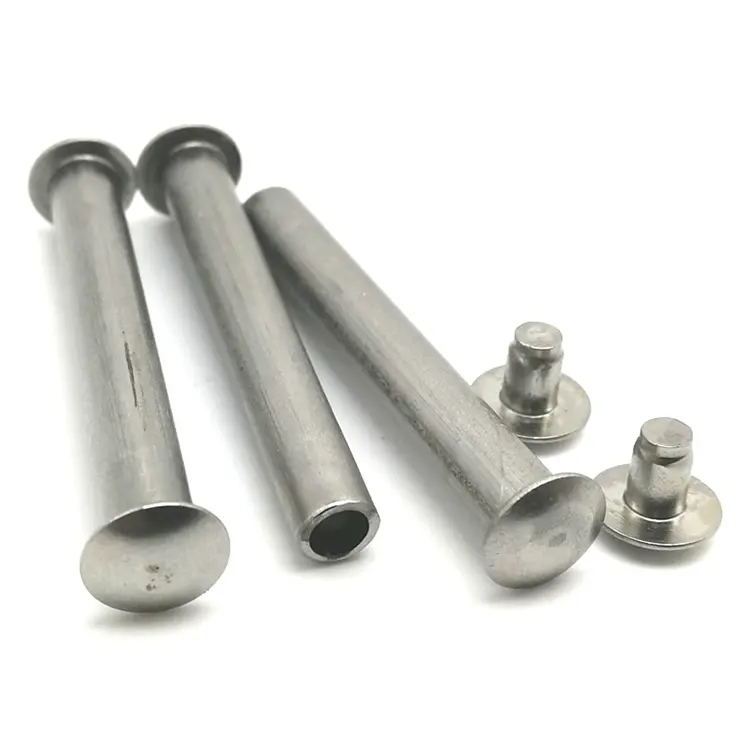
(3) Flexible structure: The structure of non-standard rivets can be adjusted according to needs, such as head shape, stem diameter, length, etc., and can even be designed to be hollow, semi-hollow or other special shapes.
구리 버섯 머리 리벳은 두 개 이상의 재료를 고정하는 데 사용되는 기계 부품입니다. 일반적으로 버섯 모양의 머리와 반대쪽 끝에 단단하거나 반쯤 빈 막대가 있습니다. 설치하는 동안 다른 쪽 끝을 특수 리벳팅 기계로 두들겨 치거나 두드리면 다른 쪽 머리가 팽창하여 제자리에 고정됩니다. Nuote Metals는 구리 버섯머리 리벳 전문업체입니다. 우리는 광범위한 리벳 사양을 제공하고 고객의 요구를 충족시키기 위해 다양한 크기의 40개 이상의 리벳팅 기계를 활용합니다.
더 읽어보기문의 보내기중국 둥관에 위치한 Nuote Metals는 리벳 전문 제조업체입니다. 우리의 리벳은 고품질이며 납품이 보장되어 국내 및 해외 고객 사이에서 호평을 받고 있습니다. 당사의 구리 플랫헤드 리벳은 고품질 구리로 제작되어 매끄럽고 섬세한 표면과 안정적이고 견고한 느낌을 제공합니다. 플랫 헤드 디자인은 접촉 면적을 늘릴 뿐만 아니라 압력을 효과적으로 분산시켜 보다 안정적인 연결을 보장합니다.
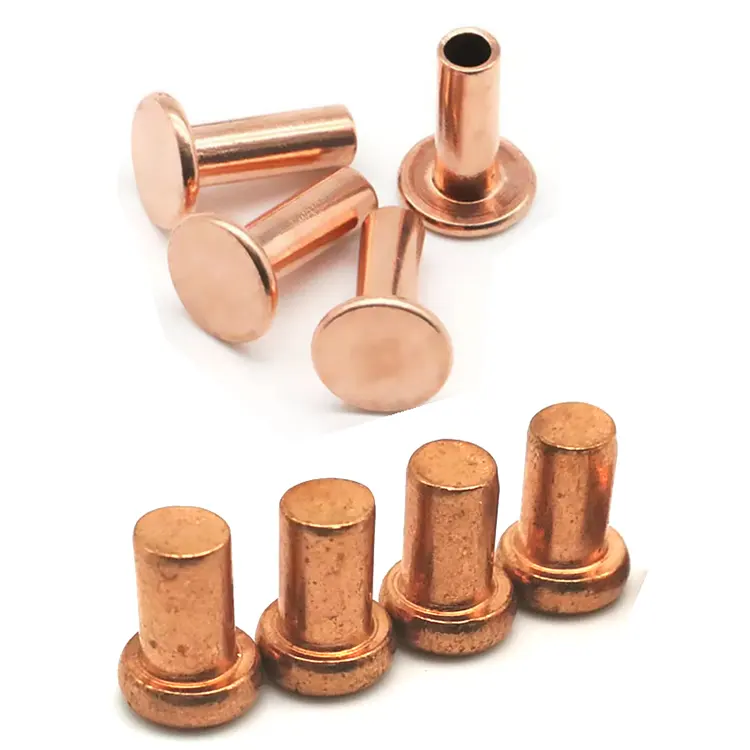
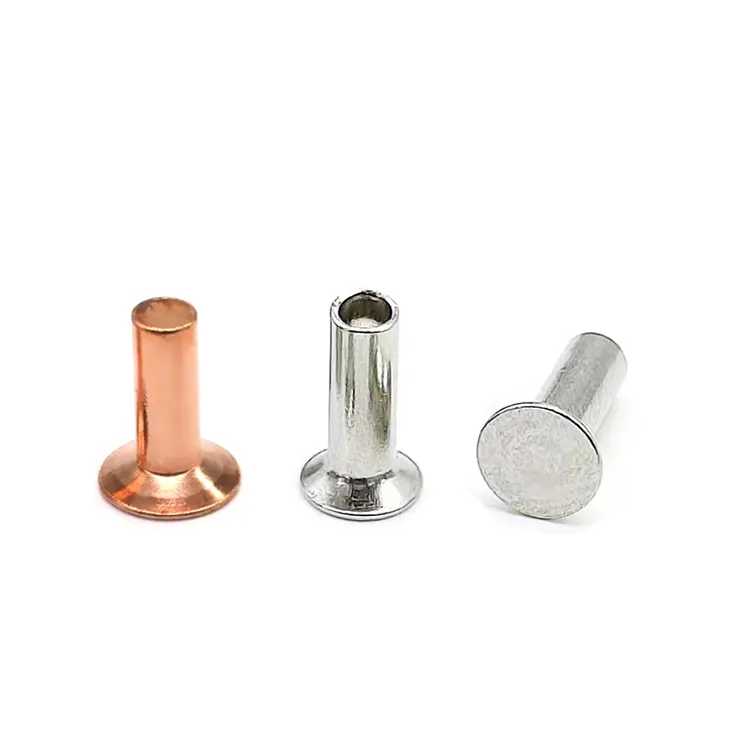
더 읽어보기문의 보내기중국 Nuote Metals에서 생산하는 구리 접시 머리 리벳은 기계 제조, 전자 장비, 가구 조립 및 기타 산업 분야에서 주로 사용되는 일반적인 금속 패스너입니다. 전통적인 금속 재료인 구리는 전기 및 열 전도성과 내식성이 뛰어나 특정 용도에 널리 사용됩니다. 접시 머리 리벳은 냉간 압조 또는 열간 단조 공정을 통해 제조된 패스너입니다. 단순한 구조에는 특수한 연결을 생성하기 위한 리벳팅 도구가 필요합니다.
더 읽어보기문의 보내기Nuote Metals는 황동 둥근 머리 리벳의 생산 및 판매를 전문으로 합니다. 우리는 산업 발전이 활발한 도시인 중국 동관에 위치하고 있습니다. 당사의 구리 세미 불기 헤드 리벳은 황동 합금으로 제작된 생크와 캡으로 구성됩니다. 세미볼기(Semi-bulgy) 헤드 디자인은 균일한 압력 분포를 제공하여 관절 표면의 손상을 방지합니다. 이 제품은 결합된 전기 전도성과 내식성, 간단한 구조, 쉬운 설치, 높은 신뢰성 및 긴 서비스 수명이 특징입니다.
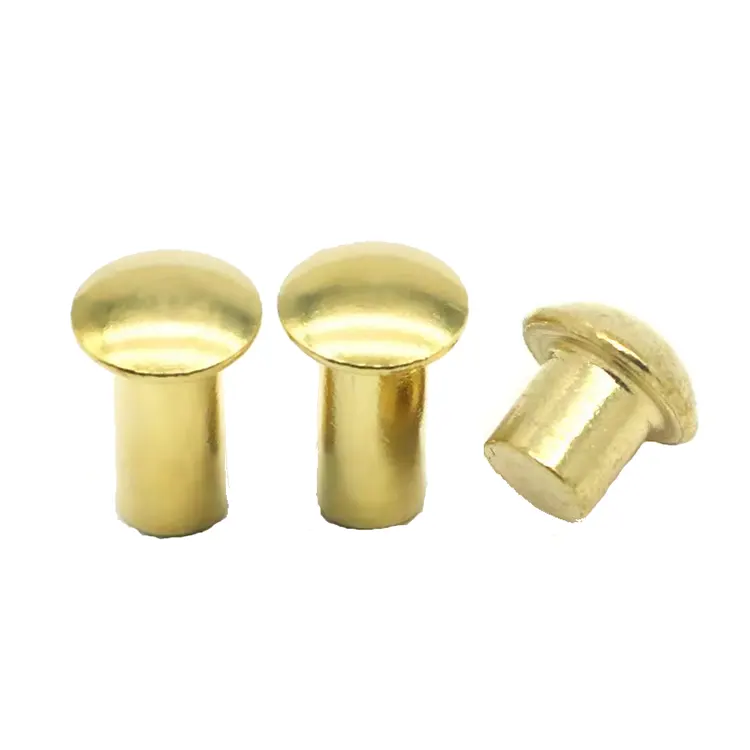
더 읽어보기문의 보내기Nuote Metals는 중국에서 황동 리벳을 생산하며, 황동 리벳은 주로 다양한 장점을 제공하는 구리 및 아연 합금으로 만들어집니다. 황동은 내식성이 뛰어나 녹슬지 않고 습한 환경에서 장기간 사용에도 견딜 수 있어 옥외 사용이나 습도가 높은 환경에 적합합니다. 황동은 또한 강도와 경도를 갖고 있어 우수한 인성을 유지하고 파손에 저항하면서 기계적 응력을 견딜 수 있습니다. 또한 황동은 전기 전도성과 열 전도성이 뛰어나 전자 및 열 장비에 사용하기에 적합합니다. 황동은 표면이 매끄러워 전기도금이나 연마가 용이하여 미관이 향상됩니다. 이러한 특성으로 인해 황동 리벳은 여러 산업 분야에서 선호됩니다.
더 읽어보기문의 보내기Nuote Metals는 황동 팬 헤드 리벳 생산을 전문으로 합니다. 당사의 리벳은 황동 함량이 높고 부드럽고 성형이 용이하며 리벳팅 과정에서 균열이 발생할 가능성이 적은 H65 황동으로 제작됩니다. 황동 팬 헤드 리벳은 헤드와 자루로 구성되며 자루는 길이의 약 절반 정도가 비어 있습니다. 설치하는 동안 리벳은 미리 뚫린 구멍에 삽입됩니다. 특수 리벳팅 기계와 펀치를 사용하여 생크의 끝 부분이 확장되어 반대쪽의 헤드를 형성하여 클램핑 연결을 만듭니다. 이 공정은 금속의 소성 변형에 의존하므로 용접이나 접착제가 필요하지 않아 간단하고 효율적입니다.
더 읽어보기문의 보내기What are the characteristics of special rivets?
(1) Strong customization: Non-standard rivets can be personalized according to factors such as the use environment, stress conditions, and assembly methods to ensure that they perform well in actual applications.
(2) Diverse materials: In addition to common carbon steel and stainless steel, non-standard rivets can also be made of special materials such as aluminum alloy, copper alloy, titanium alloy, etc. to meet different corrosion resistance, strength and weight requirements.
(3) Flexible structure: The structure of non-standard rivets can be adjusted according to needs, such as head shape, stem diameter, length, etc., and can even be designed to be hollow, semi-hollow or other special shapes.
Manufacturing process of special rivets
The manufacturing of non-standard rivets involves multiple links, mainly including:
1.Material selection: Select suitable metal or alloy materials according to the use environment. 2. 2.Cold heading or hot heading: Use pressure processing to form the basic shape of the rivet into the metal blank.
3.Turning or milling: Fine-process the details such as the head and stem of the rivet to ensure dimensional accuracy.
4.Surface treatment: Such as galvanizing, nickel plating, anodizing, etc. to improve corrosion resistance or aesthetics.
Advantages and limitations of special rivets
(1) Advantages: They can meet special needs, improve assembly efficiency and connection reliability, and are suitable for complex or high-demand application scenarios.
(2) Limitations: Since they are customized products, the production cost is high, the delivery cycle is relatively long, and customers are required to provide detailed technical parameters.
How to choose suitable special rivets?
(1) Clarify the needs: Determine the key parameters such as the rivet's operating environment, stress conditions, and corrosion resistance requirements.
(2) Material matching: Select the appropriate material based on actual needs to avoid over-design that leads to increased costs.
(3) Communicate with suppliers: Provide detailed technical drawings or samples to ensure that the non-standard rivets produced meet expectations.
What are the main applications of special rivets?
(1) Aerospace: Aircraft, rockets and other equipment have extremely high requirements for the weight, strength and high-temperature resistance of fasteners. Non-standard rivets can be optimized according to specific needs.
(2) Automobile manufacturing: Certain special models or high-performance vehicles may require non-standard rivets to meet the needs of lightweight or high-strength connections.
(3) Electronic equipment: Precision instruments or small electronic equipment may require micro non-standard rivets to ensure the stability and compactness of the connection.
(4) Construction industry: Some special-structured buildings or decoration projects may use non-standard rivets to meet specific installation requirements.
Market status of special rivets
With the advancement of industrial technology, more and more industries have begun to use non-standard rivets to optimize product design. At present, non-standard rivet manufacturers are mainly concentrated in the Yangtze River Delta and Pearl River Delta regions in China, and can provide a variety of customized services. Due to the high unit price of non-standard rivets, its market size is relatively small, but the demand in the high-end manufacturing field continues to grow.
Future development trends
(1) Lightweight design: With the improvement of energy-saving and environmental protection requirements, non-standard rivets made of lightweight materials will be more popular.
(2) Intelligent production: Automated equipment and digital management will further improve the production efficiency and quality stability of non-standard rivets.
(3) Wider application: Emerging industries such as new energy and robotics may drive the growth of demand for non-standard rivets.
In summary, special rivets are highly customized fasteners that can meet special needs that standard rivets cannot meet. Although its production cost is relatively high, it plays an irreplaceable role in industries such as aerospace, automobiles, and electronics. In the future, with the advancement of manufacturing technology, the application scope of non-standard rivets is expected to further expand.